Feature · Double Conscious · Out Now
On Double Conscious, the Kansas City rapper, producer, and brewery co-founder brings a lifetime of musical identities into one room. The hardest person to face there is his father.
By Kemet Creative Editorial Team
Before the record ends, before the drums disappear and leave the melody behind, Kemet Coleman has something to say to his dad.
“I want to apologize in advance for taking this long to write this,” he says in the spoken introduction to “Dear Phantom.” “But now’s the time.”
What follows is not the uncomplicated tribute that sentence might suggest.
There is resentment. There is childhood hurt. There is the memory of a laugh, a gap between teeth, greens and neckbones. There is a Black father teaching his son how to survive an encounter with authority. There is an attorney facing down giants. There is a son who begins by saying he doesn’t really miss his father and ends by declaring himself the inheritor of something enormous.
“I am the son of Larry Coleman, a TITAN.”
It is a long way from the Egyptian vocal textures and UK garage-meets-drill production that open Coleman’s new album, Double Conscious. It is also, perhaps, the only place the record could end.
Across ten tracks, Coleman moves through house, drum and bass, UK garage, rap, and sung desire. But the more consequential movement is between the identities people recognize and the person those identities can obscure.
The rapper. The bandleader. The streetcar guy. The beer guy.
This time, he wants the whole person in the frame.
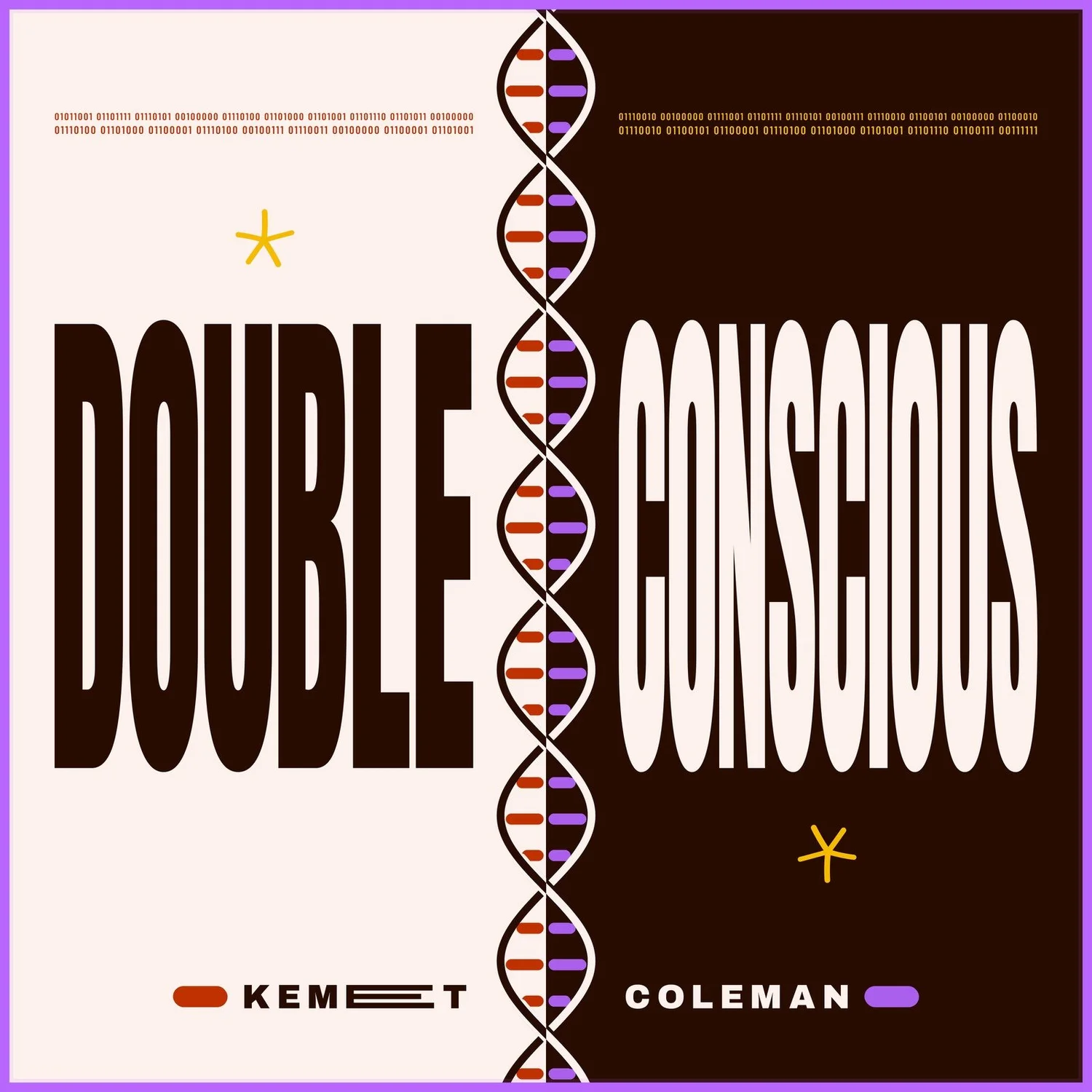
Double Conscious, out now.
The future he already heard
There is a tempting way to tell this story: the established Kansas City entrepreneur returns to music with a daring electronic reinvention.
The archive ruins that version almost immediately.
In July 2011, promoting The Fountain of Youth, Coleman told The Pitch that he was making rap at 117 to 130 beats per minute. He talked about The Matrix, its drum-and-bass soundtrack, and the discovery that electronic music and hip-hop shared roots.
“That realization destroyed a boundary,” he said.
The same interview contains what could serve as a working philosophy for Double Conscious: “My overarching goal is to bring people together and make people move.” He wanted intellectual music without “slapping you upside the head with a textbook.” The interview reads less like an abandoned youthful ambition than an early draft of the artist he is still becoming.
The dance floor was never a late-career escape route. It was there from the beginning.
So was the tension with his father.
That 2011 profile described a period when Coleman was broke, frustrated, and ready to quit music. His father had suffered a stroke. Coleman briefly redirected his energy toward Sly James’ mayoral campaign before reconsidering.
“He hasn’t always been so supportive of my music,” Coleman said of his father then, “but he definitely urged me to find what I loved and do it.”
The distance between that sentence and “Dear Phantom” is one of the real measures of this album. The younger artist was trying to justify continuing. The older one is trying to understand what continuing has cost, and what it might pass on.
The man behind the Phantom
Coleman once gave himself a name that accommodated not belonging.
In a 2019 Johnson County Library interview, he explained that “The Phantom” emerged after high school as a way to own the feeling that he would never fit in. For years, he had downplayed “Kemet,” the name his father gave him, because people mispronounced it or mocked it.
“I figured out what I meant to do once I started telling myself that my name is beautiful,” he said.
His catalog records that negotiation almost too neatly: The Invisible Man. The Death of Phantom. The Rise of Kemet. King Kemet.
Yet a career is messier than its titles.
With The Phantastics, Coleman helped build a collective where rap could move through funk, soul, gospel, rock, and improvisation. In Center of Attention, alongside Kyle James, he worked inside Kansas City’s competitive rap scene, including the sprawling “Bender” remix with Tech N9ne and other local MCs. With Marcus Lewis and Kadesh Flow in Brass & Boujee, he brought his writing into big-band arrangements.
These weren’t temporary disguises. They were working musical relationships, each giving a different part of his imagination somewhere to go.
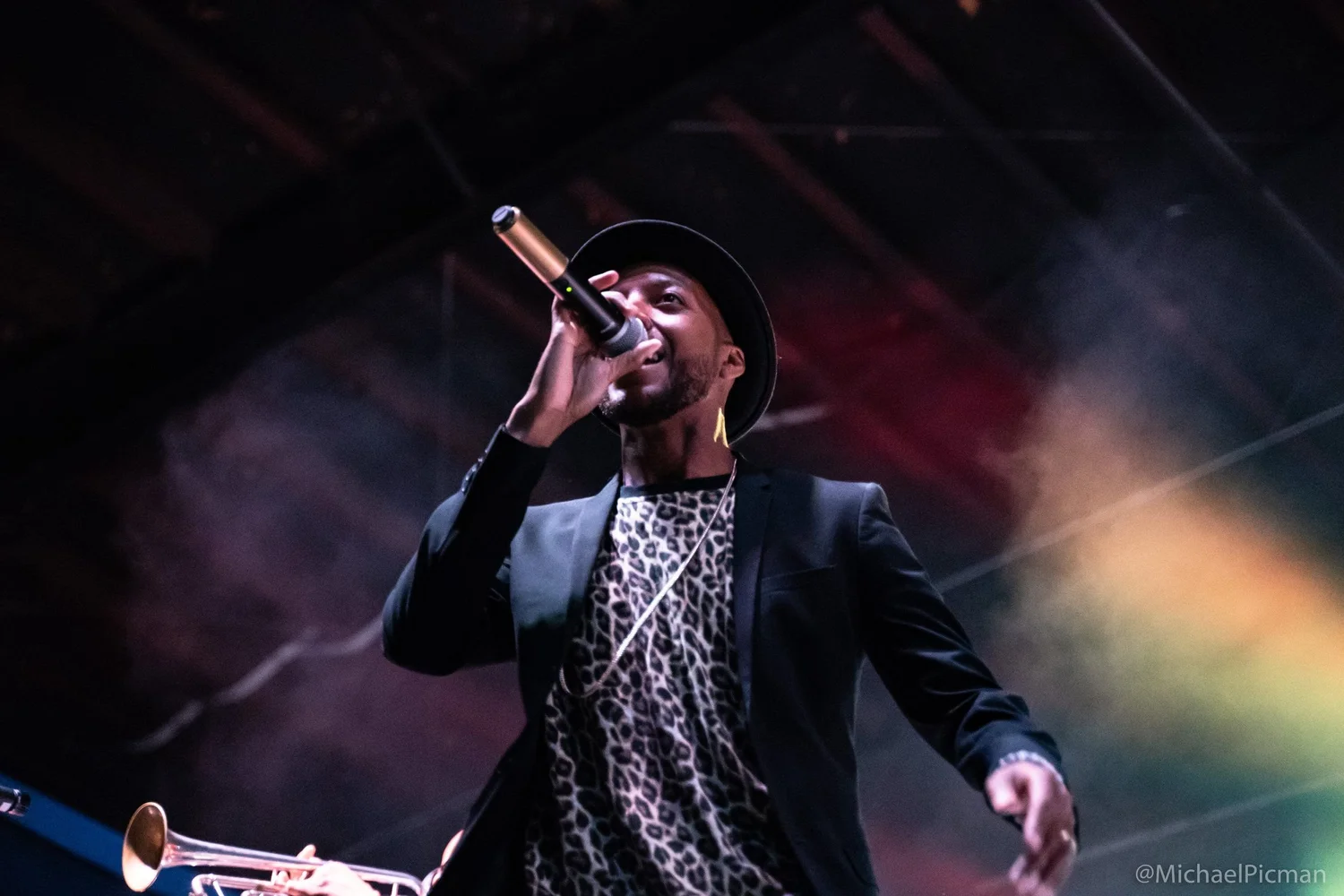
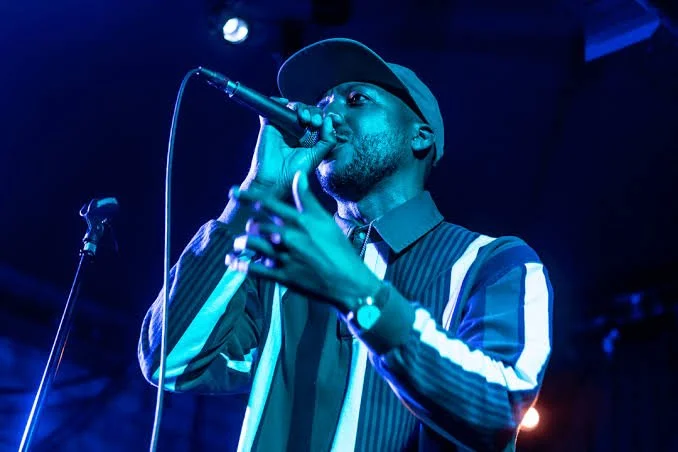
Photo: Michael Picman.
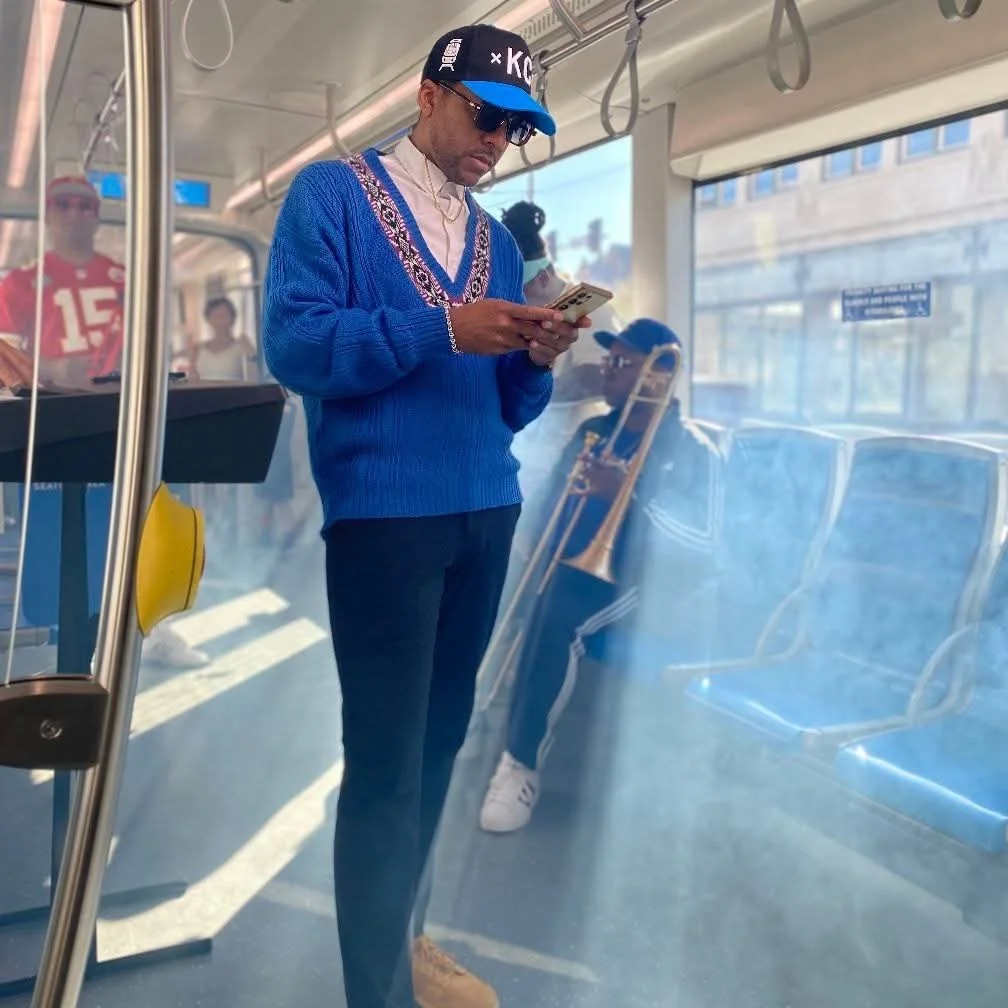
His civic work followed a similar logic. “Get Out,” his 2016 streetcar song, turned transit advocacy into an invitation to explore Kansas City. He returned to that terrain for the streetcar extension in 2025. Vine Street Brewing, which opened in 2023 as Missouri’s first Black-owned brewery, gave music another physical address.
The problem with becoming recognizable in several worlds is that each world can mistake its version of you for the complete one.
“I used to rap and shit,” Coleman says in the refrain of the album’s third track, repeating the phrase with different conversational inflections.
The verses make its past tense absurd.
“Think I’m just a beer guy,” he raps. “Think I’m just a pragmatist.”
It is less a comeback announcement than a correction to the record.
No separate rooms
The final sequence of Double Conscious refuses to sort Coleman into a rapper on one side and a dance producer on the other.
“Verify,” a brief instrumental, opens with Egyptian vocals and sitar before moving through UKG, nu-disco chords, and drill. Then “Dance Wit Me” introduces Coleman singing, Jazlyn taking the second verse, and a short rap arriving later. Its sampled invitation, “all I wanna do is make you dance wit me,” supplies the most direct possible entry point.
Before the album starts arguing about identity, it offers pleasure.
That choice matters. Artists with something to prove can make listeners sit through the proof before letting them into the party. Coleman’s sequence lets the party establish the stakes.
“I Used to Rap” and “Out of Office” then demonstrate two different kinds of command. The first gives his bars space at 85 BPM, over a loop with live bass from Joe Donley. The second accelerates to 172, putting KC-style chopping inside drum and bass.
“Over here chopping on DnB,” he raps, “but I’ve been on that KC.”
The line makes its point without stopping the song for a family tree.
“Out of Office” is also less about vacation than control: who gets access to him, what deserves his attention, what he is willing to carry. After the threats, boasts, and airplane-mode dismissal comes a revealing qualification:
“If it ain’t about the love then I’m doing it wrong.”
The next stretch takes him at his word.
“Can’t Get Enough” lives in the early appetite of attraction. “Undivided” turns anticipation into arrangement, holding back its kick and bass until halfway through. “Pressure” builds around house piano, deep low end, and chopped female vocals whose phrases include “I’m always here for you” and “Open my heart for you.”
Not every disclosure arrives as autobiography. Sometimes it is a voice cut into pieces over a dance beat.
Bringing it home without staying put
His life increasingly extends beyond Kansas City.
Coleman’s Belfast relationships began through a 2024 UNESCO music exchange and grew through return visits, performances, and collaborations. By May 2026, The Kansas City Star was reporting on his third trip and a Vine Street collaboration with Bullhouse Brewing connected to Two Ships in the Night.
“I’ve been bridging my worlds between music and beer,” he told the paper.
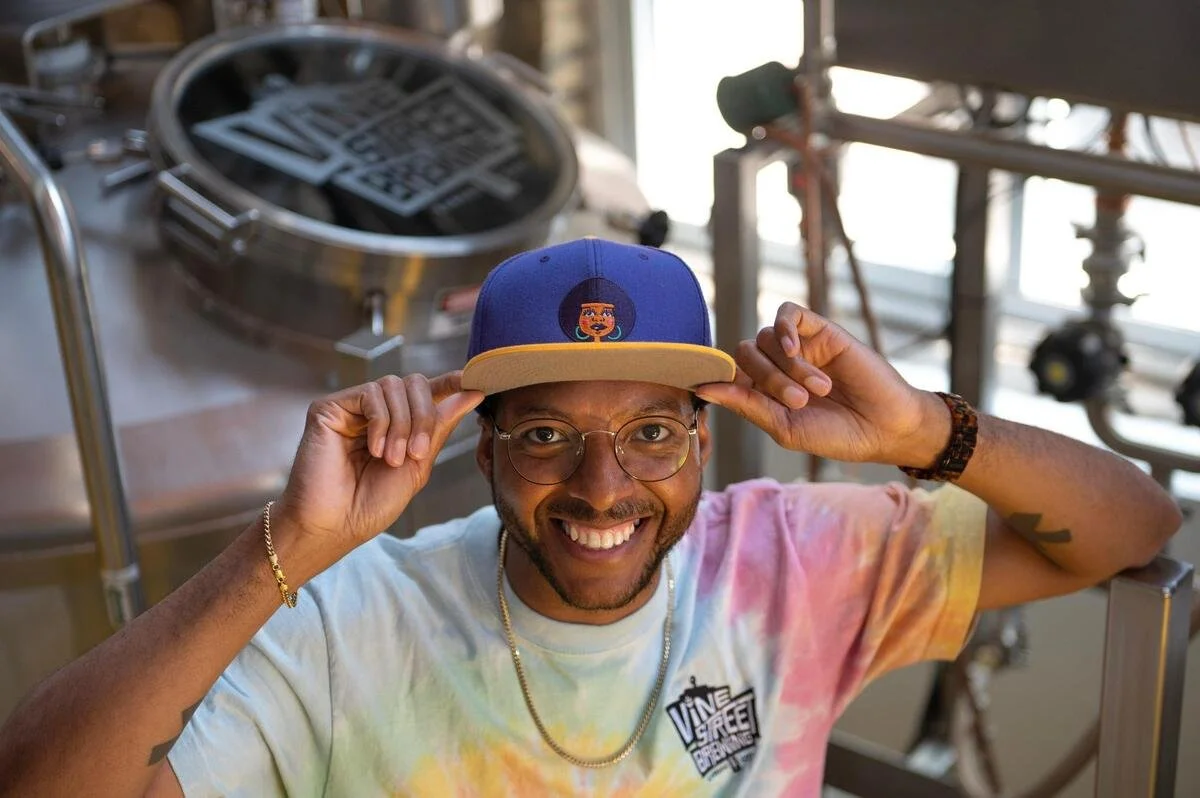
The beer side of that bridge has its own origin story. Coleman was once fired from Boulevard Brewing Co. for shooting a music video at the brewery. Instead of keeping music and beer in separate rooms, he co-founded a room of his own: Vine Street Brewing, in an 1850s building at 18th & Vine that had sat empty for decades.
Now the beer travels with the records. For Double Conscious, Belfast’s Out of Office brewed a collaboration beer named after the album, a fruited sour with mango, raspberry, vanilla, and coconut, poured for the first time at the release show upstairs at Ulster Sports Club.
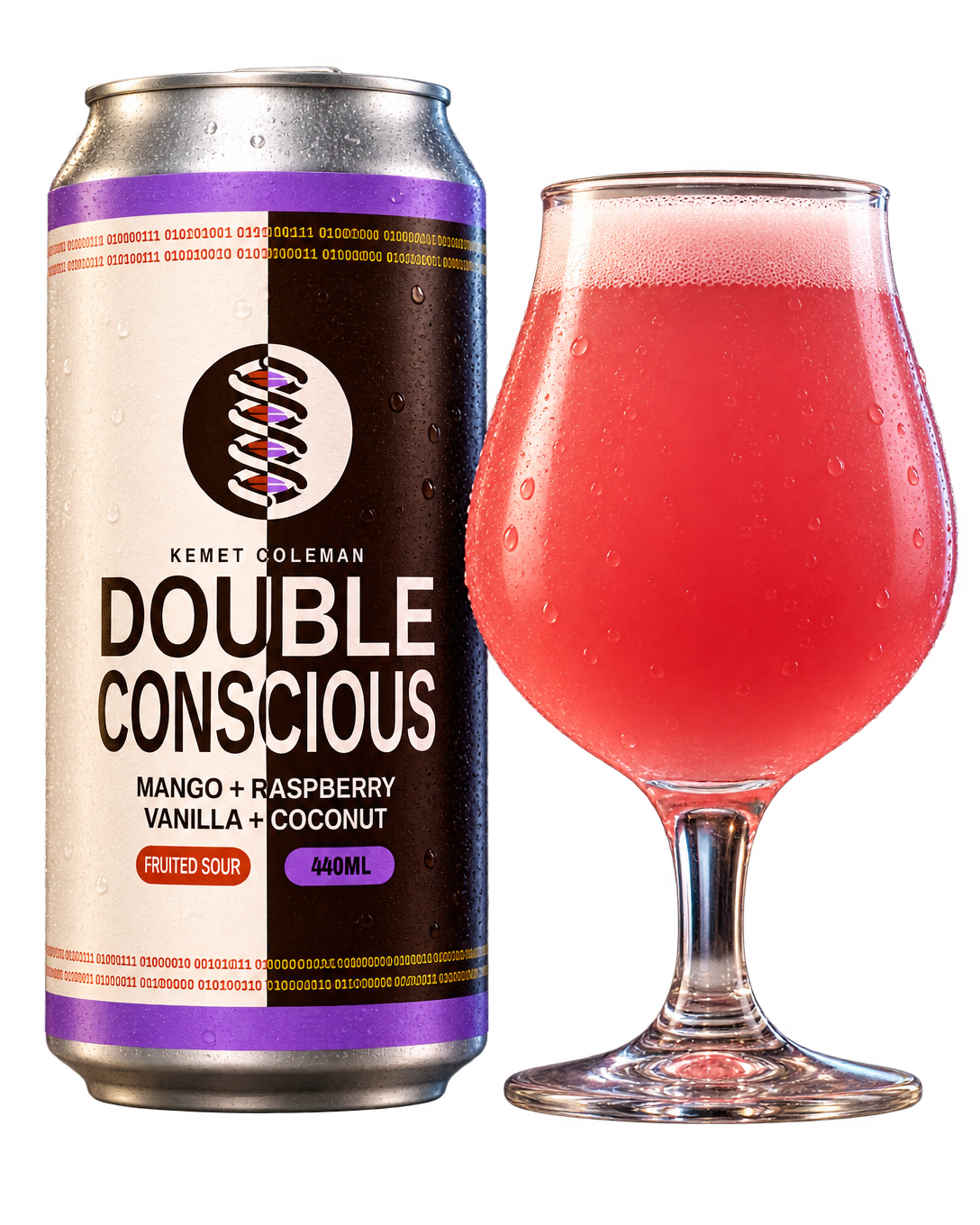
A rendering of the Double Conscious collaboration beer from Out of Office in Belfast.
The artist who lost a brewery job for bringing a camera and a song through the door now releases albums with beers brewed for them, an ocean apart.
The map has expanded, but the method is familiar: find a relationship, build something around it, let one creative practice open a door for another. Europe is not a departure from his Kansas City identity. It is another place to test how far that identity can travel without becoming a souvenir of itself.
The album’s closing stretch narrows the lens again.
“Dreamland,” carried forward from his earlier Synesthesia project, makes room for tenderness and a hushed delivery. “Float” balances the satisfaction of building an empire with distrust of the people watching it, before turning toward those still holding him down.
Then comes his father.
Rev. Larry Coleman, an attorney and civil-rights advocate, died in May 2025. In the Star’s remembrance, Kemet described a passionate, principled man who helped people in trouble: “He would go against giants.”
“Dear Phantom” keeps that admiration without letting it erase the difficult memories.
Coleman says an earlier attempt to write about his father produced nothing. This one arrived “like a waterfall.” He cried while writing it. At 71 BPM, it is slower than he feels comfortable rapping.
“I hate rappin this slow,” he begins. “I just wanna go fast.”
For an artist who has spent years finding ways to accelerate, combine, expand, and build, the line carries an unusual admission. There is no technical escape from this conversation. He has to stay inside it.
The beat belongs to Dominique Sanders, the Grammy Award-winning producer and bassist based in Los Angeles by way of Kansas City. Sanders played bass on Coleman’s biggest songs, including “Get Out” and “Stay in Your Lane,” and he is the only producer on Double Conscious besides Coleman himself, making it the second Coleman album produced entirely by the two of them. For the hardest song on the record, the circle stayed that small.
By the end, the song has reached his own children and the Coleman legacy. The drums leave. The melody remains.
That is why Double Conscious has the makings of a pivotal album, rather than just another release in a deep catalog. Its significance isn’t that Coleman has finally discovered how to combine his interests. The record says he has understood that possibility for years.
It is that the combination now has something harder to hold: experience without a clean moral, confidence without immunity to hurt, inheritance without pretending the past was simple.
The Phantom once offered a way to live with not fitting in.
Here, Coleman makes room for the parts of himself that don’t resolve.
And at the end, he addresses his father by the name he once used to disappear.
Double Conscious is out now. Stream on Spotify · Apple Music · SoundCloud · Buy on Bandcamp
The release lands on Bandcamp Friday, a bit of serendipity for an album built around connections. Listen below or pick up Double Conscious on Bandcamp.
Reporting
The Pitch, 2011 · The Pitch, 2012 · Strange Music, 2013 · The Pitch, 2014 · KCUR, 2017 · The Bridge, 2018 · Johnson County Library, 2019 · KCUR, 2023 · KCUR, 2024 · Kansas City Star, 2025 · Axios Kansas City, 2025 · Kansas City Star, 2026